


Your privacy at Phenikaa Hue
Phenikaa Hue uses necessary mechanisms to operate this website. Optional cookies and third-party content load only with your permission. You can reject them or change your choices through Privacy settings in the footer.

📞 Hotline: +84 79 660 8686
📧 Email: support.pnkh@phenikaa.com
🌐 Website: www.phenikaahue.com
📱 Facebook: @Phenikaahue.official
💼 LinkedIn: Phenikaa Hue
Differences in engineered stone price are not caused only by raw materials and technology. They are also strongly affected by international market volatility. As the Iran conflict escalates, the Strait of Hormuz is increasingly exposed to disruption, pushing up oil prices, freight costs, and raw material prices.
For quartz engineered stone, this pressure appears clearly through three main channels: rising energy costs, more expensive logistics, and precautionary raw material stockpiling. Among them, Material is the most heavily affected category before the pressure spreads across the entire 4M model.

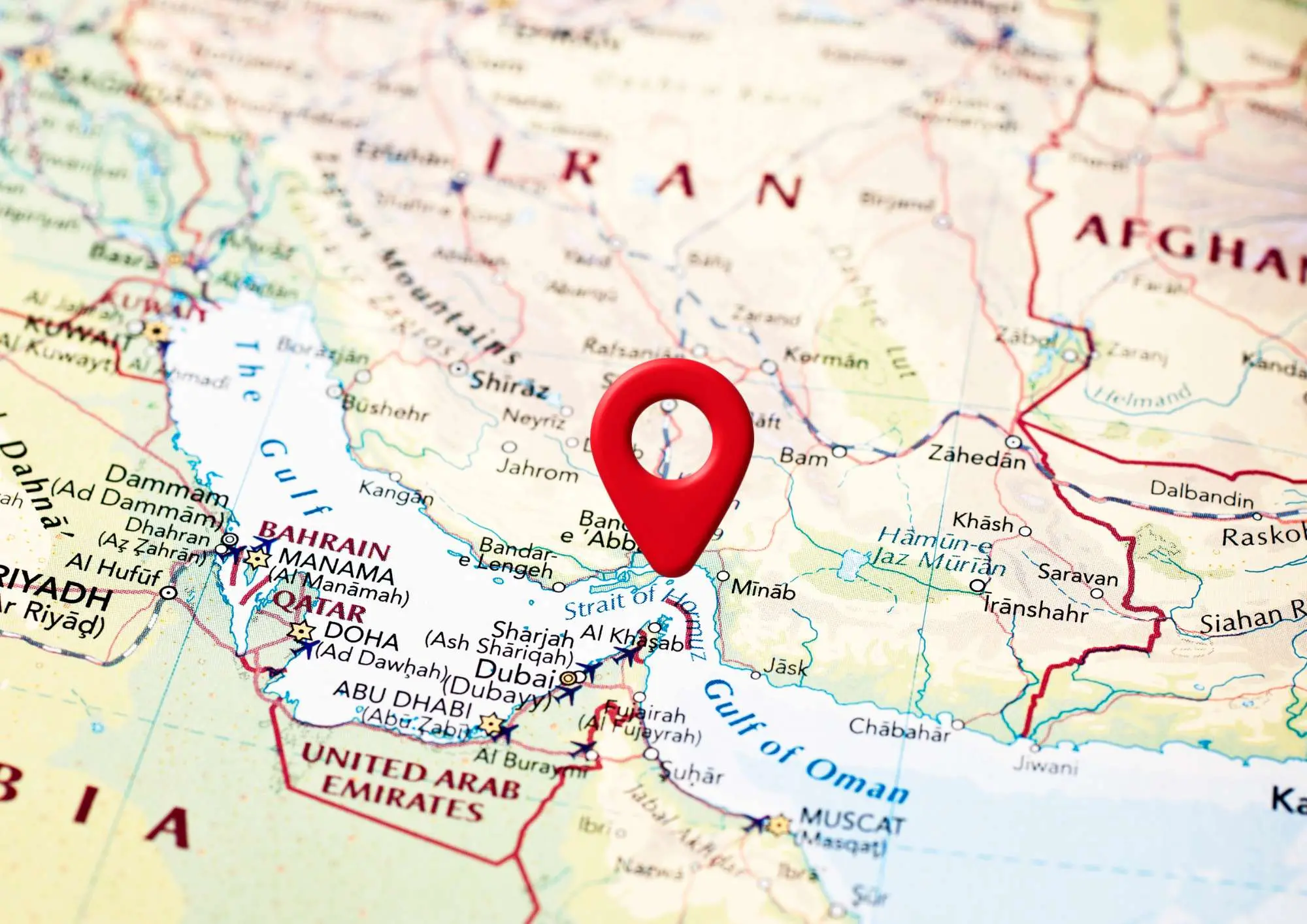
The Strait of Hormuz plays a vital role in the transport of oil, liquefied natural gas, and global energy flows.
In the production of quartz engineered stone, manufacturers rely on mineral aggregates such as quartz, silica, and cristobalite, combined with resin, pigments, additives, packaging materials, energy, and logistics. In this chain, a significant share of cost is tied to oil, gas, and maritime transportation. The Strait of Hormuz is one of the world’s most strategic energy transit routes, and the current conflict has caused sharp fluctuations in oil prices while also increasing shipping risks, war-risk insurance costs, and fuel surcharges.
For the engineered stone industry, this means that even if the production formula remains unchanged, input costs can still rise because the global business environment has changed.
That is why, in the current context, the question of engineered stone price cannot be separated from geopolitics. Prices are rising not only because of supply shortages, but also because energy is more expensive, transportation is riskier, and raw material suppliers tend to raise prices defensively.
This is the most visible and direct impact. Iran and the Gulf region hold an important position in the global oil and gas market, so when conflict escalates, oil prices usually rise due to concerns about supply disruption and transport risk through the Strait of Hormuz. As oil prices increase, fuel costs for mining, crushing, drying, calcining, and the overall mineral processing chain also rise.
The Iran conflict does not need to hit a specific quartz mine or chemical plant directly. As long as it pushes up oil and energy costs, Material costs in engineered stone production will increase significantly.
If energy is the first impact, logistics is the second. As security risks in the Middle East rise, sea freight costs also move upward because of higher fuel prices, increased war-risk insurance, longer waiting times, and route adjustments.
For companies that depend on imported raw materials, this pressure feeds directly into engineered stone price. On the other hand, manufacturers with more stable supply chains, stronger inventory positions, or higher localization rates gain an advantage during volatile periods.
When the market expects a prolonged conflict, continued oil price increases, and persistent shipping difficulties, both suppliers and buyers tend to adopt defensive behavior. Suppliers often build a safety margin into quotations, while manufacturers increase inventory to avoid the risk of supply shortages.

Why is engineered stone cost under pressure?
Among the four factors, Material is where the Iran conflict has the strongest impact. Higher oil prices put pressure on mineral and resin costs. More expensive shipping and war-risk insurance further raise import costs. Stockpiling behavior also pushes up average purchasing prices.
Because raw materials usually account for the largest share of production cost in quartz engineered stone, any fluctuation in Material almost certainly affects engineered stone price.
As raw material prices rise, production technology becomes even more important. The core technology of engineered stone is vibro-compression under vacuum, which allows for high aggregate density while reducing the amount of binder required.
This means a strong production line not only creates better-looking slabs, but also helps manufacturers use raw materials more efficiently. In a period of rising Material cost, factories that reduce surface pores, slab warpage, air bubbles, and scrap rates more effectively will enjoy a clear cost advantage.
When both minerals and resin become more expensive, production errors become far more costly. A small batching error, color deviation, incomplete pressing cycle, or slab warpage caused by poor curing control can cost a manufacturer much more than during stable periods. That is why Man — operating experience, formula adjustment capability, and the ability to detect deviations early — directly influences a company’s control over engineered stone price during volatile periods.
When conflict drives Material costs upward, Method becomes the key lever for optimization. Formula design, particle size distribution of quartz/silica/cristobalite, resin loading, mixing time, vacuum time, pressing conditions, and curing regime are all variables that help offset part of the cost pressure. An optimized formula can reduce excessive resin dependence, improve color stability, and lower surface defect rates. A poorly optimized formula, by contrast, amplifies the cost impact of the conflict.
Material: the largest cost component; directly affected by the Iran conflict because oil prices, logistics, marine insurance, and stockpiling all push up the cost of minerals, resin, pigments, and supporting materials.
Machine: technology determines the waste rate; a better production line uses raw materials more efficiently and reduces scrap when material costs rise.
Man: workforce skill directly affects product stability; when raw materials become more expensive, every production error becomes more costly.
Method: the production formula and operating process determine final efficiency; this is where manufacturers can optimize to reduce the impact of raw material volatility.
The Iran conflict does not affect engineered stone cost in a simple one-step way. Instead, it creates a clear chain reaction: energy costs rise, logistics costs rise, insurance costs rise, stockpiling increases, and in the end, all of this pressure concentrates on Material — the largest cost component in the factory. Once Material becomes more expensive, quartz engineered stone manufacturers must either absorb the increase or pass part of it on through selling prices. How much the price rises then depends on the other three parts of the 4M model: technology, people, and process.
So if the question is why engineered stone price is under pressure today, the answer is clear: the Iran conflict is not only pushing up oil prices, but also making the entire raw material and logistics chain more expensive. And when the most cost-sensitive factor — Material — is hit directly, the final product cost can hardly remain unchanged.
________
Cristobalite from Phenikaa Hue is a reliable choice for manufacturers looking to improve engineered stone quality and strengthen their competitiveness in international markets. With high whiteness, strong consistency, and solid supply capacity, Phenikaa Hue is ready to support manufacturers in optimizing raw materials and developing better products.

Phenikaa Hue – a trusted Cristobalite supplier.
CONTACT PHENIKAA HUE NOW TO RECEIVE A CRISTOBALITE SAMPLE FOR TESTING:
📞 Hotline: +84 79 660 8686
📧 Email: support.pnkh@phenikaa.com
🌐 Website: www.phenikaahue.com
📱 Facebook: @Phenikaahue.official
💼 LinkedIn: Phenikaa Hue
See also
 Hướng dẫn mua
Discover 5 key criteria for selecting high-quality Cristobalite for the materials industry. Optimize product performance, durability, and aesthetics in industrial applications.
 Hướng dẫn mua
Keywords: Cristobalite, Phenikaa Hue, cristobalite cakingMeta description: Caking during storage can significantly impact the final quality of Cristobalite-based products. Phenikaa Hue identifies the causes and offers practical solutions to help businesses prevent this issue and
 Hướng dẫn mua
The Strait of Hormuz – a critical global oil shipping route – is one of the most strategic maritime chokepoints in the world. If Iran moves forward with its plan to shut down the strait, global maritime transport could face a severe shock, disrupting energy flows and logistics on a massive scale.