


Your privacy at Phenikaa Hue
Phenikaa Hue uses necessary mechanisms to operate this website. Optional cookies and third-party content load only with your permission. You can reject them or change your choices through Privacy settings in the footer.

💼 LinkedIn: Phenikaa Hue
In the mineral processing industry, Cristobalite is considered one of the most critical foundational materials, particularly in the production of engineered stone, coatings, composite materials, and technical glass. With many years of experience, Phenikaa Hue is proud to own a closed-loop Cristobalite production process that utilizes cutting-edge technology, ensuring the product achieves the highest levels of whiteness, purity, and stability – meeting the demanding needs of international markets.
Cristobalite is a high-temperature crystalline polymorph of Silicon Dioxide (SiO₂), formed when quartz sand is treated at temperatures exceeding 1.470°C. Compared to natural Quartz, Cristobalite has a more stable crystalline structure, higher whiteness, and superior heat resistance, making it highly preferred across various industries.

The Cristobalite from Phenikaa Hue is manufactured under a stringent, international-standard process.
In engineered stone production, Cristobalite helps create brightness, gloss, and enhances the mechanical strength of the product. In the paint and coating industry, Cristobalite provides a smooth, scratch-resistant surface with excellent light reflection capabilities. Furthermore, Cristobalite is applied in technical plastics, ceramics, refractory materials, and optical glass.
However, to achieve this quality, Cristobalite cannot be used directly in its raw form. Quartz sand must undergo a rigorous mineral processing procedure, including screening, phase transformation (calcination), fine grinding, and quality control, to eliminate impurities and optimize the crystal structure.
The main raw material for Cristobalite production at Phenikaa Hue is natural quartz sand selected from mines with SiO₂ ≥ 99,5%, high natural whiteness, and extremely low impurity levels. These mines are located in the Central Vietnam region – recognized for having some of the cleanest and purest silica sources in the area.

Phenikaa Hue processes minerals according to international standards, trusted by leading businesses worldwide.
Before being introduced into production, the raw material is strictly inspected for chemical composition and particle uniformity. Beyond SiO₂, indicators such as Fe₂O₃ (≤ 0,03%) and Al₂O₃ are also closely monitored to ensure optimal whiteness and light reflectance for the refined Cristobalite product. Only batches of raw materials that meet international standards are fed into the production line.
At Phenikaa Hue, the Cristobalite production process operates on a highly automated system, strictly controlling every stage to ensure consistent quality from input raw material to the final product.
The mined raw sand is transported by specialized trucks to the plant's receiving warehouse. From here, the sand is loaded into the feeding hopper and transferred through a high-pressure washing system. This process helps remove impurities, dust, clay, metal oxides, and oversized particles.

Thanks to the closed-loop recycling washing technology, water consumption is minimized and reused, ensuring both cleaning efficiency and environmental friendliness. After this stage, the raw material reaches a high level of purity, ready for the thermal treatment stage.
This is the most critical stage in the Cristobalite production process. Clean silica sand is fed into a high-capacity rotary kiln, operating at temperatures ranging from $1,400^\circ\text{C}$ to $1,600^\circ\text{C}$.
Under the effect of high temperature, the Quartz (α-SiO₂) crystal transitions its phase to Cristobalite (β-SiO₂) – creating a new crystal structure with high whiteness, strong light reflectivity, and superior stability.

The calcination equipment at Phenikaa Hue is directly imported from Germany.
Throughout the calcination process, parameters such as temperature, rotation speed, and material retention time are automatically controlled via the operation center. Operating staff continuously monitor data on the SCADA surveillance system to ensure the phase transformation is perfect, avoiding defects in the crystal structure.
After exiting the kiln, the Cristobalite is cooled in a controlled manner to stabilize the crystal structure. Abrupt temperature reduction can cause cracking or deformation of the particles, which is why Phenikaa Hue utilizes a sequential cooling system, maintaining a steady and continuous rate of temperature decrease.
This stage helps the Cristobalite achieve the required mechanical strength, whiteness, and phase stability – the factors determining its suitability for high-end industrial applications such as engineered stone and composites.
The stabilized Cristobalite is fed into European-technology ultra-fine grinding mills, producing products with diverse particle sizes ranging from $5\mu\text{m}$ to $45\mu\text{m}$ depending on the application.
This process is monitored by a laser analysis system to ensure uniform particle size distribution (stable D50). The product is then automatically classified into:
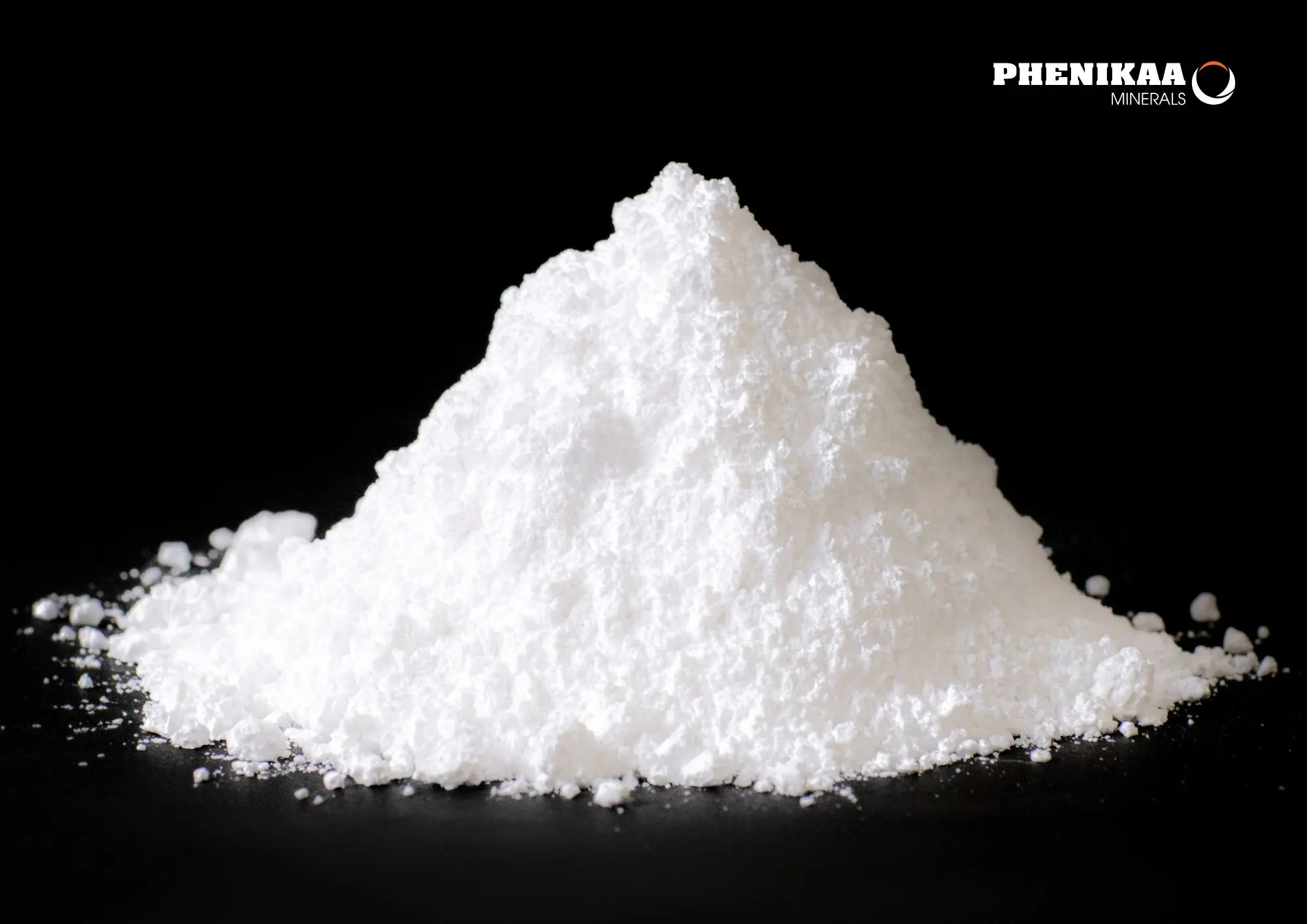
Cristobalite Powder: Used in the production of paints, coatings, engineered stone, and composites.
Granular Cristobalite: Used in glass, ceramics, and technical materials.

Finished grinding mill and technology from the Hosokawa brand (Germany).
Thanks to the closed-loop grinding and classification system, the product achieves a whiteness of over 98%, smooth particle surfaces without breakage, and no cross-contamination during production.
Before leaving the factory, every batch of Cristobalite product is tested at the ISO 9001:2015 certified laboratory. The analyzed criteria include:
Purity (SiO₂ ≥ 99,8%)
Whiteness ≥ 98%
Average Particle Size (D50)
Moisture and bulk density

Finished products are carefully quality-checked before sale.
Upon meeting requirements, the product is packaged in 25kg PP bags or 1 ton jumbo bags, with clear labeling regarding lot code, production date, and origin. The goods are then stored in dry, clean conditions before being transported to the export port.
At Phenikaa Hue, quality control is integrated into every stage of production. The plant simultaneously applies international standards such as:
ISO 9001:2015 – Quality Management
ISO 14001:2015 – Environmental Management
ISO 45001:2018 – Occupational Health and Safety
ISO 14067:2018 – Carbon Footprint Management in Production
SA 8000 – Social Accountability Standard
Furthermore, advanced technology helps optimize the whiteness, durability, and purity of Cristobalite while minimizing environmental impact and improving energy efficiency.
Thanks to the modern, closed-loop process and a team of experienced engineers, Phenikaa Hue ensures that every ton of Cristobalite exported meets international standards, is uniform, and reliable for customers both domestically and internationally.
More than just a manufacturer, Phenikaa Hue is also a strategic partner for many global engineered stone and technical material companies. With large production capacity, modern automated lines, international standard management systems, and a spirit of continuous innovation, Phenikaa Hue is asserting its position as a leading Cristobalite supplier in Vietnam.

Phenikaa Hue – Refined from nature, standardized by technology, creating value for Vietnamese minerals in the international market.
Leave your information with Phenikaa Hue to receive detailed Cristobalite documentation and consultation.
📞 Hotline: +84 79 660 8686📧 Email: kdvt.pnkh@phenikaa.com🌐 Website: www.phenikaahue.com📱 Facebook: @Phenikaahue.official
💼 LinkedIn: Phenikaa Hue
See also
 Kỹ thuật
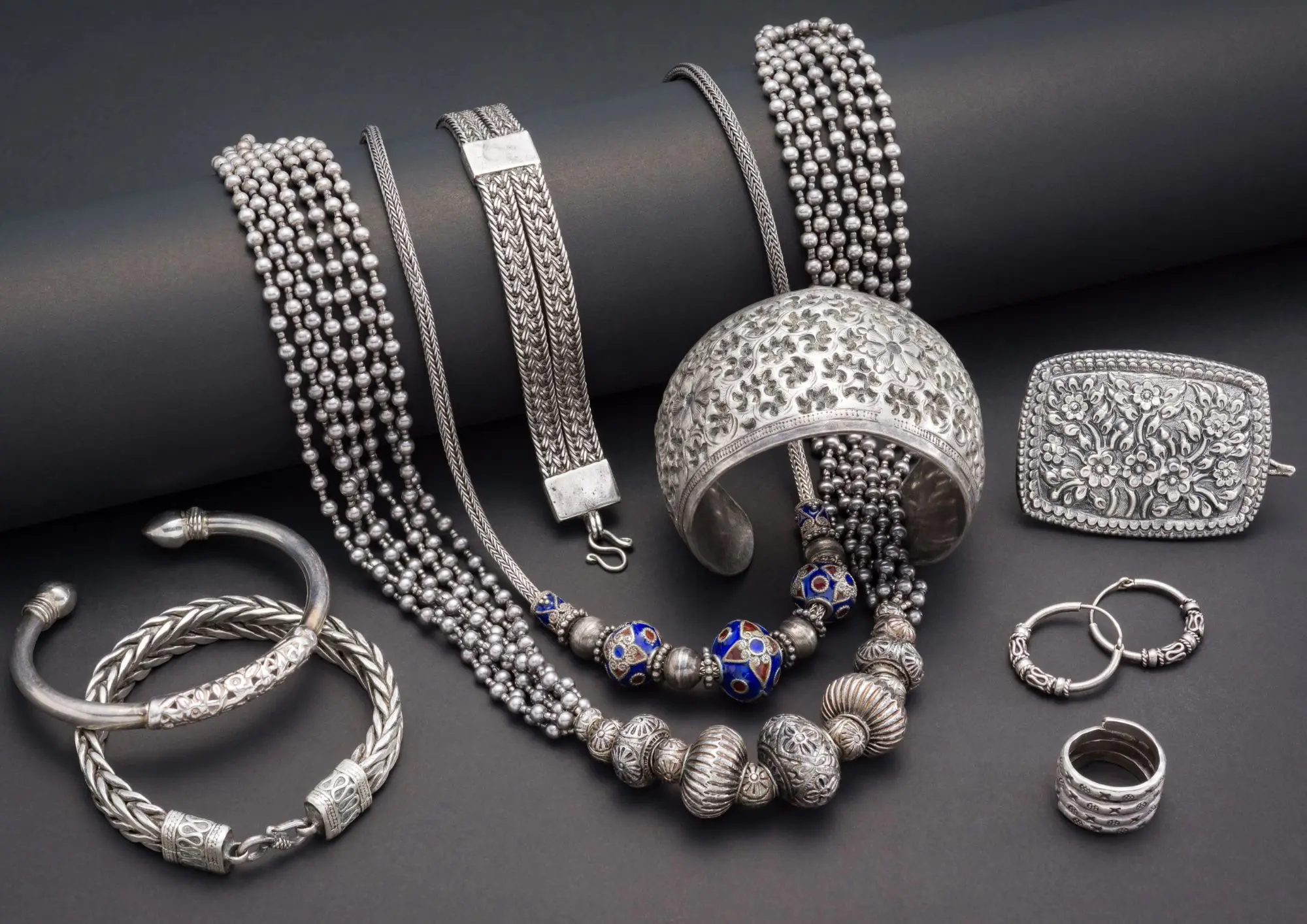
High-purity Phenikaa Hue Cristobalite with optimal thermal expansion, delivering ultra-smooth, sharp jewelry casting molds that meet international standards.
 Kỹ thuật
Discover the role of ultrafine grinding in producing cristobalite from silica sand, delivering superior durability and whiteness for paint, plastic and rubber.
 Kỹ thuật
Decoding the cracking issue in artificial stone production from Cristobalite, a comprehensive analysis from materials to processes and effective solutions with Phenikaa Hue.