


Your privacy at Phenikaa Hue
Phenikaa Hue uses necessary mechanisms to operate this website. Optional cookies and third-party content load only with your permission. You can reject them or change your choices through Privacy settings in the footer.

📞 Hotline: +84 79 660 8686
📧 Email: support.pnkh@phenikaa.com
🌐 Website: www.phenikaahue.com
📱 Facebook: @Phenikaahue.official
💼 LinkedIn: Phenikaa Hue
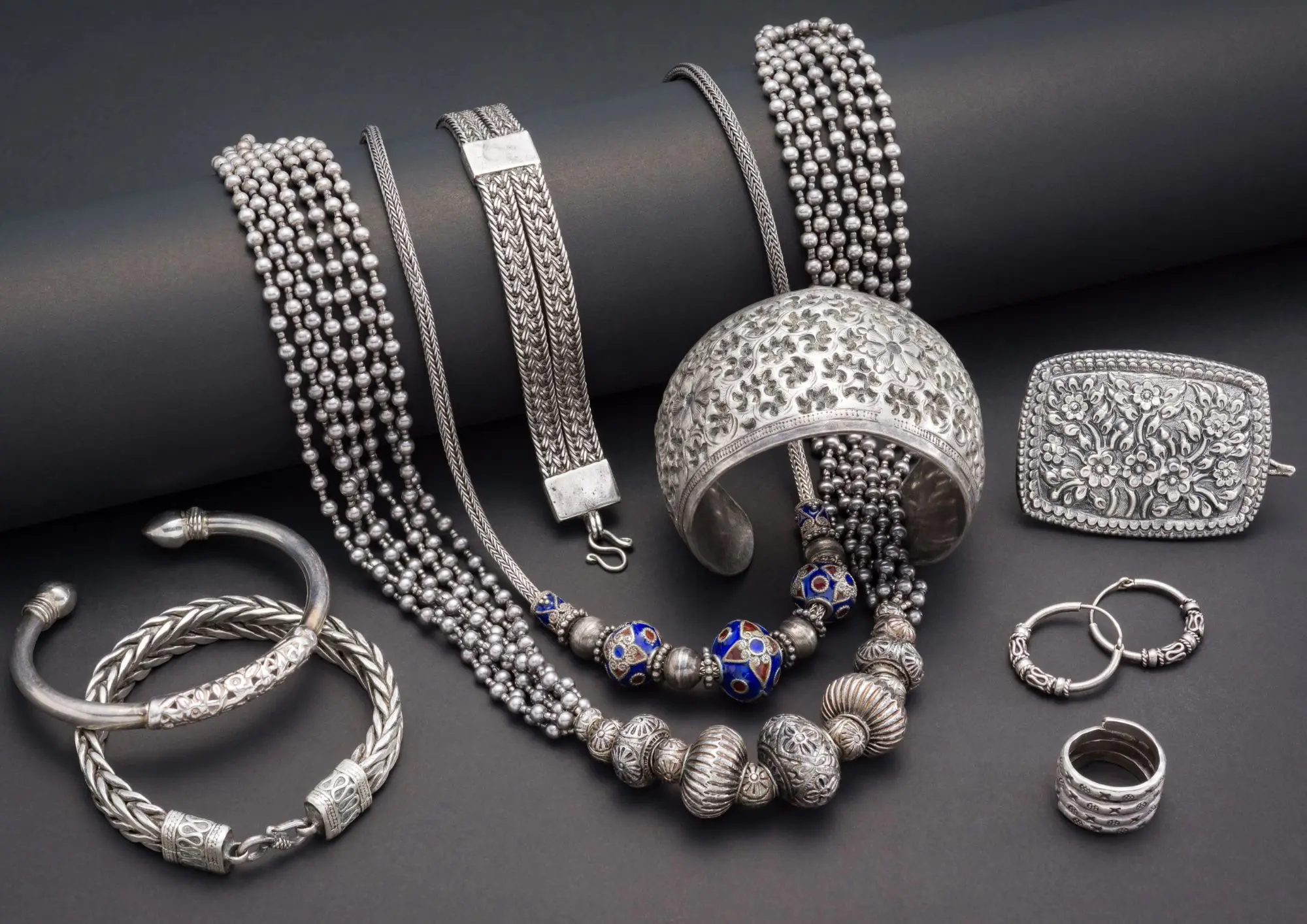
In the world of jewelry making, the quality of the final product depends up to 70% on the quality of the mold. Choosing the right jewelry casting investment powder not only determines the surface refinement but also directly impacts the return on investment (ROI) and the reputation of the foundry.

Jewelry casting mold materials
Below is a summary of the 5 core materials leading the global market in 2026:
| No. | Material | Primary Mineral Source | Key Advantages | Disadvantages | Common Applications | Est. Global Usage Rate |
|---|---|---|---|---|---|---|
| 1 | Gypsum (Calcium Sulfate) | Natural gypsum, mined from deposits (USA, Mexico, Vietnam) | Good heat resistance (up to 700-900°C), easy to mix, low cost, high precision | Prone to cracking if humidity is not controlled, requires setting time | Investment molds for lost-wax casting (Gold, Silver, Platinum) | ~60-70% in jewelry casting |
| 2 | Silica (Quartz) | Quartz minerals, extracted from silica sand (Australia, USA, China) | High thermal durability (over 1000°C), thermal shock resistance, smooth surface | Silica dust is hazardous without PPE, higher cost than gypsum | Core component in investment powder, ceramic molds | ~20-30% in investment mixtures |
| 3 | Cristobalite (Crystalline Silica) | High-temperature silica conversion (Japan, EU) | Superior thermal expansion compensation, high purity (≥99.5%), reduces casting defects | High cost, requires advanced refining technology | High-end molds for luxury jewelry (White gold, Diamonds) | ~15-25% in premium investment |
| 4 | Sand (Silica-based sand) | Natural silica sand from mines (India, Vietnam, USA) | Inexpensive, easy to use for large molds, reusable | Low precision, rough surface finish, unsuitable for intricate details | Sand casting for large jewelry (Bangles, chunky rings) | ~10-15% in artisanal production |
| 5 | Ceramic (Clay-based) | Clay and aluminosilicate minerals (China, Europe) | Extreme heat resistance, smooth surface, highly durable | Long fabrication time, fragile/brittle under impact | Precision casting ceramic molds, modern hybrid molds | ~5-10% in modern applications |
Gypsum has long held a dominant position in the jewelry industry due to its economic efficiency and abundant supply. It is the core binder in jewelry casting investment powder, creating stable heat-resistant molds when mixed with water.
Pros: Excellent ability to replicate fine surface details for complex designs.
Technical Note: To achieve optimal results, artisans must strictly control the water-to-powder ratio (ideally 38-40ml water/100g powder) to prevent cracking from thermal shock. Renowned brands like Ransom & Randolph (R&R) continue to use gypsum as a primary ingredient to optimize production costs globally.
Finely ground from natural quartz, Silica is an indispensable reinforcing agent that helps molds remain stable at high temperatures without deformation.
Role: In lost-wax casting, Silica prevents shrinkage, ensuring the geometric integrity of the jewelry is preserved.
Modern Standards: Despite its performance, silica dust poses health risks, requiring modern foundries to be equipped with certified air filtration systems. High-end powders like Certus Prestige Optima utilize high-purity silica, trusted in demanding markets like the USA and Japan.
Refined through the calcination of quartz at extreme temperatures (1470°C), High-purity Cristobalite is the premium crystalline variant used for high-end jewelry.

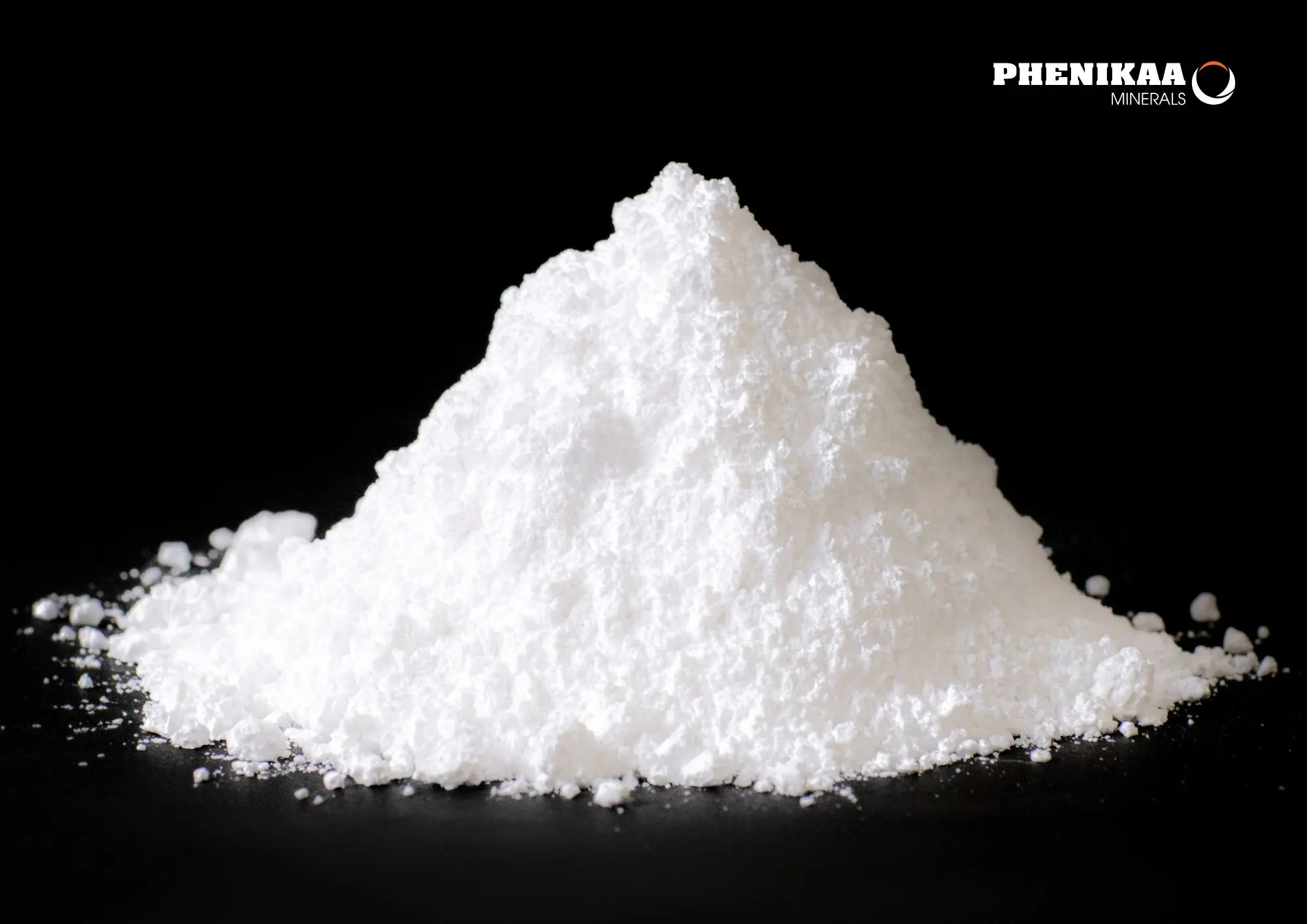
Cristobalite Powder from Phenikaa Hue.
Unique Value: Its ability to provide precise "thermal expansion compensation" is unmatched, keeping dimensional errors at an absolute minimum and reducing casting defects to below 5%.
International Standards: In EU and US markets, Cristobalite with purity ≥99.5% is now a mandatory standard for premium investment formulas. While the investment cost is higher, the value in terms of precision and safety for "cast-in-place" gemstones is invaluable.
Sand casting remains a staple due to its simplicity and excellent material reusability.
Applications: Particularly suited for prototypes, rustic jewelry, or large-scale accessories (chunky jewelry).
Improvements: Today, combining silica sand with modern binders has significantly improved surface smoothness, narrowing the quality gap with closed-mold casting.
Crafted from clay and aluminosilicates, ceramic molds offer exceptional heat resistance, ideal for continuous casting or metals with high melting points.
Hybrid Trends: In the Industry 4.0 era, ceramic molds are often combined with 3D printing to create highly complex products that traditional gypsum molds cannot achieve.
Characteristics: Although the burnout cycle is long (2-4 hours), the smooth surface and structural rigidity make it a top choice for artistic jewelry designers in Europe.
The modern jewelry industry is undergoing a material revolution where precision is no longer an advantage—it is a requirement. Shifting toward specialized refined minerals, specifically Cristobalite, is not just a trend; it is a commitment to quality and a statement of brand prestige on the international stage.
To meet the rigorous technical barriers of the EU, USA, and Japan, luxury foundries are replacing traditional materials with investment powders containing High-purity Cristobalite (≥99.5%). This strategic shift delivers tangible values:
Micron-level detail accuracy.
Mirror-like surfaces, reducing post-casting finishing time.
Significantly lower defect rates, increasing profitability.
Safety compliance (Free silica dust <1%).
As a prestigious Cristobalite supplier in Vietnam, Phenikaa Hue provides high-end crystalline silica solutions tailored for the jewelry industry:
| Technical Specifications | Phenikaa Hue Standards | Benefits for Jewelry Casting |
|---|---|---|
| SiO₂ Purity | ≥ 99.5% | Stable molds, no reaction with precious metals |
| Particle Size (d50) | 1-10 µm (Customizable) | Ultra-smooth surfaces, sharp details |
| Whiteness (L value)* | > 96 | Prevents metal discoloration |
| Thermal Stability | Precisely controlled phase transition | No mold cracking, high yield rates |
| International Certifications | ISO 9001, 45001, 14001, 50001, SA 8000 | Technical peace of mind and ethical competitive advantage |
Our products come with international certifications, detailed datasheets, and dedicated technical support—helping foundries easily optimize their investment formulas.
Jewelry casting is not just a mixture of gypsum—it is the crystallization of technology and material science. Cristobalite is the "secret" that turns jewelry into true masterpieces.

Choose a reliable Cristobalite supplier to ensure your products shine in the global market.
Contact Phenikaa Hue now to receive a free test sample:
📞 Hotline: +84 79 660 8686
📧 Email: support.pnkh@phenikaa.com
🌐 Website: www.phenikaahue.com
📱 Facebook: @Phenikaahue.official
💼 LinkedIn: Phenikaa Hue
See also
 Kỹ thuật
High-purity Phenikaa Hue Cristobalite with optimal thermal expansion, delivering ultra-smooth, sharp jewelry casting molds that meet international standards.
 Kỹ thuật
Discover the role of ultrafine grinding in producing cristobalite from silica sand, delivering superior durability and whiteness for paint, plastic and rubber.
 Kỹ thuật
Decoding the cracking issue in artificial stone production from Cristobalite, a comprehensive analysis from materials to processes and effective solutions with Phenikaa Hue.